

Energy Efficiency in HVAC Systems: 8 Gains Delivered by Automation
8/16/2026
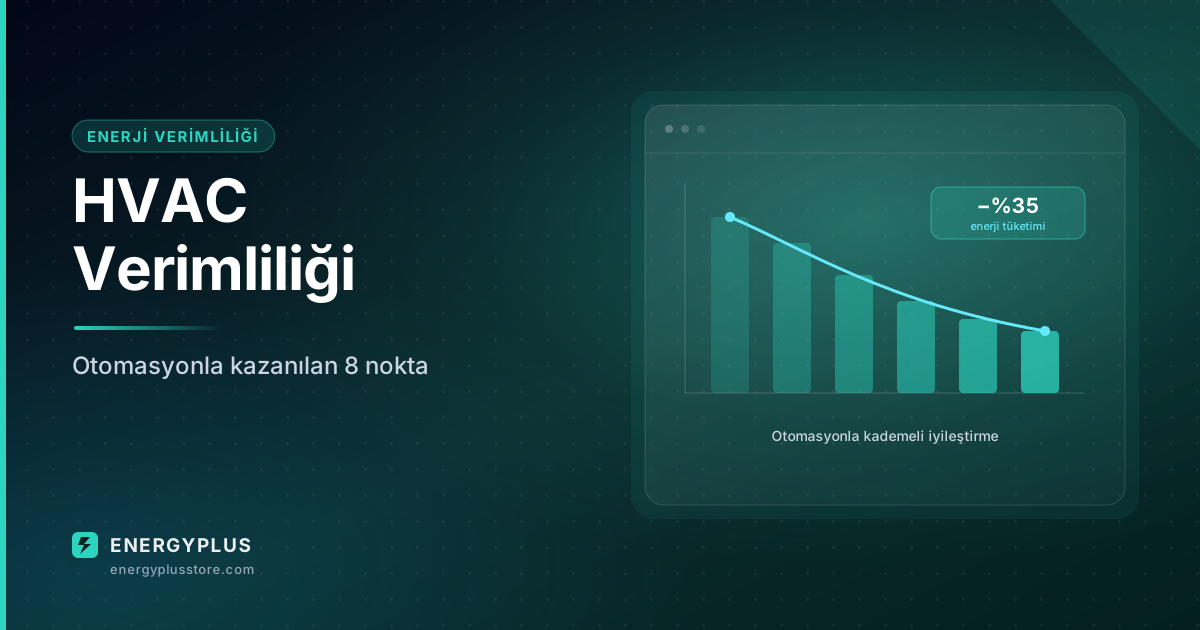
Where energy is lost in heating and cooling systems, and which savings automation genuinely delivers — set out in measurable items.
Most of the energy consumed in buildings goes to heating, cooling and ventilation. The good news is that a significant share of this consumption can be reduced without buying new equipment, simply by correcting the control strategy. Below are the eight items that pay off most in the field.
1. Correct valve sizing
An oversized control valve turns modulating control into on/off behaviour; temperature swings and the pump and boiler run unnecessarily. Valve authority should not fall below 0.3. You can check your existing selections with our valve sizing tool.
2. Operating at a high ΔT
A low ΔT means a higher flow rate for the same thermal output — and pump energy rises with the cube of flow. Raising ΔT from 10 K to 15 K cuts the flow rate by a third and delivers a much larger drop in pump consumption.
3. Variable flow pumping
A fixed-speed pump draws the same energy even when the load falls. A variable speed drive under differential pressure control saves considerably at part load. The critical point is placing the differential pressure sensor correctly — near the most remote point of the circuit.
4. Economiser (free cooling)
Cooling with outdoor air instead of mechanical cooling when the outdoor temperature allows brings substantial gains in shoulder seasons. Enthalpy-based control makes better decisions than dry-bulb control in humid climates.
5. Demand-controlled ventilation
Adjusting fresh air flow according to a CO₂ sensor removes unnecessary heating and cooling load in empty or lightly occupied spaces. The effect is greatest in meeting rooms, classrooms and dining areas.
6. Heat recovery
Transferring energy from exhaust air to fresh air markedly lowers the ventilation heating load. Rotary and plate types differ in efficiency; without a properly designed frost protection and bypass strategy the expected gain will not materialise.
7. Correct scheduling and night setback
The simplest item, and the most frequently skipped. Setting back setpoints when the building is unoccupied and applying optimum start (bringing the plant on early enough to be ready exactly at opening time) saves energy with no capital investment.
8. What is not measured is not managed
Without energy meters, trend logs and alarm rules, no improvement can be called permanent. The most common situation we see in the field is a well-designed system degraded over time by manual interventions. Continuous monitoring catches this early.
Where to start?
Before investing in new equipment, reviewing the settings of the existing system usually gives the highest return: schedules, setpoints, valve and damper calibration, sensor accuracy. Metering infrastructure comes next, and equipment renewal after that.
For system analysis and automation solutions, get in touch. Our engineering tools: valve sizing, AHU airflow, cable sizing.